April 7, 2026 • Celeste Morrow • 9 min reading time • Prices verified June 4, 2026
Face Tanners That Actually Layer With Your Serum Routine — No Breakouts, No Pilling
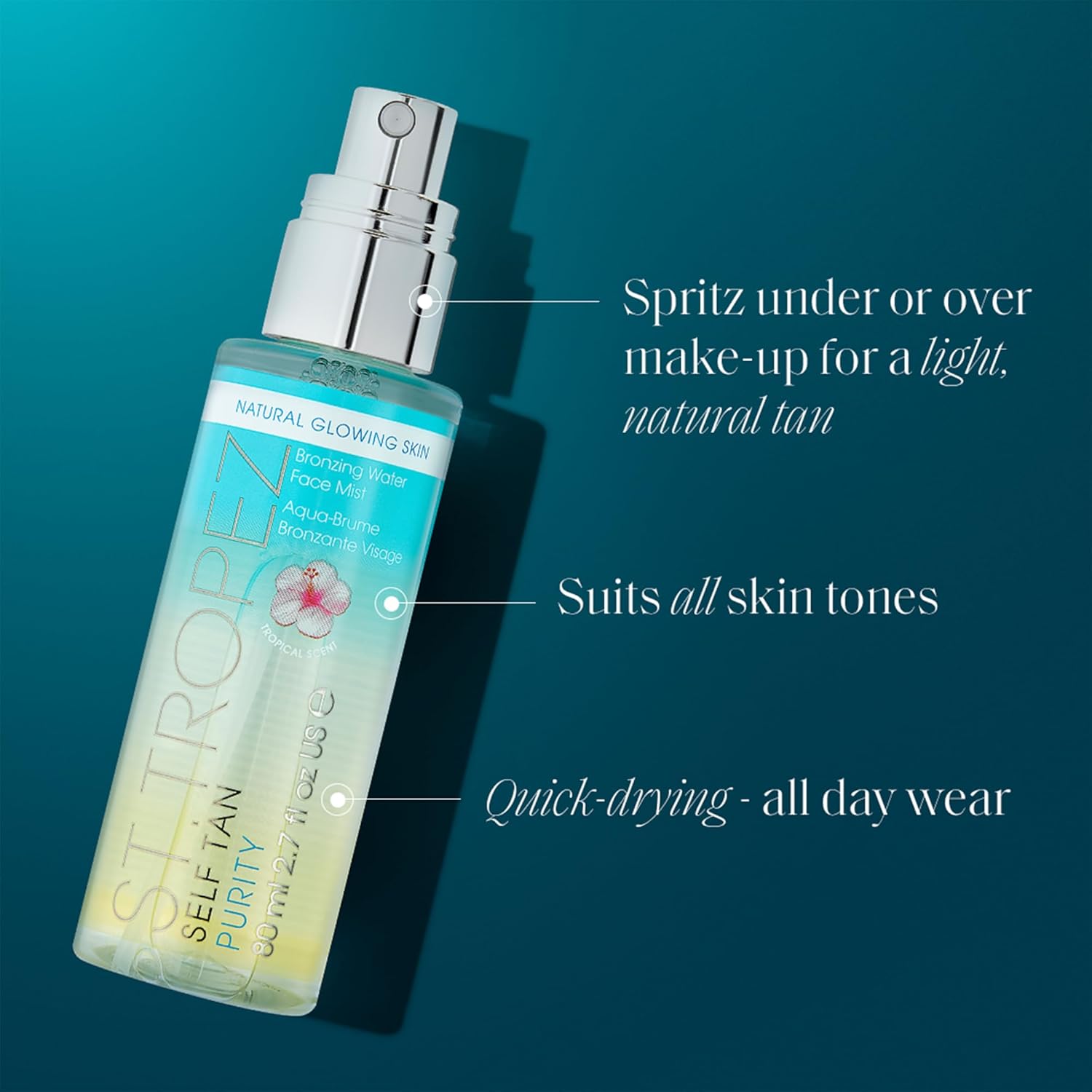
If you have ever put a regular body self-tanner on your face and woken up to clogged pores, patchy color, or a serum that balled up into little flakes when you applied it — welcome to the most under-discussed problem in sunless tanning. Self-tanning products for the face work through a colorless sugar compound called DHA (dihydroxyacetone) that reacts with the outermost layer of your skin to produce a brown pigment. That reaction is chemistry, and chemistry cares about what else is on your skin. Your face is probably running the most active routine in your bathroom — vitamin C, retinol, AHAs, niacinamide — and most of those ingredients interfere with DHA’s ability to develop evenly, or they get physically disrupted by the heavier, wax-laden formulas built for body skin. This guide is about solving that specific problem: which face-tanning formulas are lightweight enough to layer, how to sequence them within a serum routine, and what to do if you’re also using retinol.
| EDITOR'S PICK[Eco Tan Face Tan Water](https://www.amazon.com/dp/B01D48SZ7O?tag=greenflower20-20) | Mid-tier[TAN-LUXE The Face - Illuminatin…](https://www.amazon.com/dp/B01F47VWKK?tag=greenflower20-20) | Budget pickL'Oreal Paris Sublime Bronze Se… | |
|---|---|---|---|
| Size | 100ml | 0.38 fl oz | 1 fl oz |
| Gradual tan | ✓ | — | ✓ |
| Fragrance-free | — | — | ✓ |
| Scent type | No fake tan smell | — | — |
| Key ingredient | Hyaluronic Acid | — | Hyaluronic Acid |
| Price | $38.00 | $28.00 | $19.99 |
| See on Amazon → | See on Amazon → | See on Amazon → |
Why Face Skin Is a Different Game
The face presents three distinct challenges that body skin doesn’t:
Sebum and pore density. Forehead, nose, and chin zones produce significantly more oil than the forearm or thigh. A mousse or lotion formula with a heavy emollient base will sit in those pores, oxidize unevenly, and read as splotchy or orange-tinted by morning. Reviewers at Byrdie consistently flag this as the number-one complaint with body-formula-on-face application — the T-zone developing faster and darker than the cheeks, creating an inadvertent contouring effect that isn’t flattering.
Active ingredient concentration. Most dedicated skincare users run at least one exfoliating acid (glycolic, lactic, or mandelic) and one vitamin C product on their face. Both of these lower the skin’s surface pH. DHA develops color most efficiently in a slightly acidic environment — roughly pH 5 to 6 — but Healthline’s overview of DHA chemistry notes that when pH drops significantly below 5, as happens with high-concentration AHAs, the Maillard-adjacent reaction responsible for color development becomes inconsistent, producing patchiness. Timing matters here, not avoidance.
Retinol compatibility. This is where most intermediate tanners get confused. Paula’s Choice’s expert guidance on retinol and self-tanner clarifies the key point: retinol doesn’t chemically block DHA, but it does accelerate cell turnover, which means your tan fades faster and is more likely to develop unevenly on skin that’s mid-cycle from a retinol application. The practical rule is a 24-to-48-hour buffer between a retinol application and your face tan, not a permanent either-or.
What to Look for in a Face-Specific Formula
Not every product marketed as a “face tanner” is actually formulated with the face’s needs in mind. Here’s how to read between the lines.
DHA concentration and erythrulose ratio. Face formulas generally run lower DHA concentrations than body formulas — typically 3% to 5% versus 5% to 8% — because the face’s thinner stratum corneum (outermost skin layer) reacts faster and more intensely. Some premium formulas supplement DHA with erythrulose, a slower-developing sugar that extends color longevity and softens the initial color payoff. Vogue’s roundup of face self-tanners highlights erythrulose-containing formulas as the better choice for fair skin tones precisely because the color builds more gradually and is easier to control.
Texture and base ingredients. The best face-specific formulas in the intermediate-to-premium tier are built on water-based or dry-oil bases rather than heavy creams or lotions. Look for formulas that list glycerin, hyaluronic acid, or squalane as primary moisturizing agents — these play well with serums applied over them and are less likely to pill when layered. Avoid formulas where mineral oil, petrolatum, or thick silicone polymers (dimethicone in large quantity) appear in the top five ingredients; they create a barrier that can physically lift subsequently applied serums.
Non-comedogenic certification or dermatologist-tested status. This matters more for face formulas than body formulas. Allure’s face self-tanner guide recommends prioritizing products that explicitly carry non-comedogenic labeling, particularly for anyone prone to breakouts on the jawline, cheeks, or along the hairline — the zones most likely to accumulate product.
The Layering Sequence That Actually Works
Here is the sequencing framework that the majority of experienced reviewers and dermatologist commentary converges on. Think of it less as a rigid protocol and more as a decision tree.
On tanning nights (classic or overnight develop):
- Cleanse thoroughly — remove sunscreen, makeup, and any oil residue.
- Apply any water-based hydrating serums (hyaluronic acid, niacinamide) and let them absorb fully — at least two minutes.
- Skip vitamin C, AHA/BHA exfoliants, and retinol entirely on this night.
- Apply your face tanner. Use fingertips or a damp sponge applicator for even coverage; avoid dragging.
- Let the tanner dry completely before adding any occlusives or moisturizer over top.
- In the morning, rinse, then resume your normal routine.
On non-tanning nights (the majority of your week):
Run your full active routine normally. Retinol, acids, vitamin C — none of these need to be permanently paused. They just shouldn’t share a night with your tanner application.
The morning-after vitamin C question. Several reviewers on aggregated forums note that applying high-concentration vitamin C (15%+) the morning immediately after an overnight tan can subtly lighten or interfere with the color that’s still in its final development phase. Paula’s Choice’s guidance on antioxidants and DHA suggests waiting until your tan has fully developed (typically 6 to 8 hours post-rinse) before applying vitamin C. A lower-concentration vitamin C derivative like ascorbyl glucoside, used in many brightening serums, appears less disruptive in aggregated reviewer reports.
By the Numbers: Face Formula Benchmarks
| Formula tier | Typical DHA % | Develop time | Expected fade (days) |
|---|---|---|---|
| Gradual / everyday (Bondi Sands Everyday Face, ~$18) | 1.5–3% | 4–8 hrs cumulative | 3–5 |
| Mid-tier drops (Isle of Paradise Face Drops, ~$32) | 3–5% | 4–8 hrs single application | 5–7 |
| Premium dry-oil / serum hybrid (Tan-Luxe The Face, ~$55) | 3–5% + erythrulose | 6–8 hrs | 7–10 |
| Salon-grade / professional (Vita Liberata Facial Tanning Serum, ~$65) | 5%+ | 2–4 hrs express or 6–8 hrs classic | 7–10 |
DHA percentages sourced from brand specification disclosures and aggregated reviewer reports as of May 2026; individual results vary by skin type and preparation.
Specific Formula Notes From Aggregated Reviews
Tan-Luxe The Face Illuminating Self-Tan Drops (~$55). Reviewers consistently describe this as the closest thing to a serum in a face-tanner format. The base runs on a glycerin and aloe backbone, which layers under moisturizer without the pilling issues common to thicker formulas. Byrdie’s roundup of face tanners notes the erythrulose inclusion as a particular advantage for fair-to-medium skin tones, producing a golden finish rather than the orange cast that lower-quality DHA-only formulas are prone to. The customizable dosing — one to three drops mixed into your existing moisturizer — is flagged as both a strength (dial in your depth) and a potential inconsistency risk (results vary if your moisturizer base is heavily silicone-laden).
Isle of Paradise Self-Tanning Face Drops (~$32). The mid-tier benchmark for this category. Reviewers at multiple aggregated sources describe consistent color development across different Fitzpatrick skin tones when the green-tinted shade is used for olive-to-medium complexions. The water-based formula is broadly compatible with layering. The trade-off versus the premium tier is fade speed — most reviewers report color noticeably diminishing by day five on faces running active exfoliant routines, compared to seven-plus days for erythrulose-supplemented formulas.
Vita Liberata Facial Tanning Serum (~$65). The brand’s proprietary botanical-infused base is a notable differentiator in aggregated dermatologist commentary. EWG’s ingredient review database flags the formula as free from parabens and artificial fragrance, which matters for the growing segment of skincare-first consumers prioritizing ingredient transparency on the face. Reviewers note the express develop option (two to four hours, then rinse) as a practical advantage for people who prefer not to sleep in product. Color payoff is described as richer and longer-lasting than mid-tier alternatives, with reviewers specifically noting better performance on drier skin types that tend to fade faster.
A note on the “biscuit smell” question. The distinctive DHA development odor is reported as less pronounced with serum-format face products than with traditional lotions — likely a function of lower total DHA concentration and the reduced occlusion that lets the skin breathe during development. Tan-Luxe and Vita Liberata both receive consistent marks in reviews for minimal or well-masked development scent, though no face formula eliminates the reaction entirely.
If X, Then Y: The Decision Framework
Use this to shortcut the choice based on where you actually are in your routine.
If you’re running retinol 3+ nights per week: You have the most restricted layering calendar. Prioritize a fast-develop formula (Vita Liberata’s express option) that you can apply on a retinol-off night, rinse in two to four hours, and have fully settled before your next retinol application. Don’t try to skip retinol nights permanently — your tan fades faster, not slower, when you stop turnover.
If you’re on a vitamin C and AHA morning routine only, no retinol: You have the most flexibility. An overnight drops formula (Tan-Luxe The Face, Isle of Paradise) applied on any evening works cleanly — just delay morning vitamin C application until after your tan has fully developed.
If you’re breakout-prone and new to face tanning: Start with a gradual formula (Bondi Sands Everyday Face or equivalent) applied two to three times per week rather than a single overnight application. This lowers concentration exposure per session and lets you identify any reactivity before committing to a premium formula. Allure’s face self-tanner guide specifically recommends this “patch and pace” approach for acne-prone skin.
If you’re in the premium tier and prioritizing longevity over flexibility: Vita Liberata Facial Tanning Serum with a classic develop cycle, layered over bare skin after your water-based serums have absorbed, is the formula approach most consistently associated with seven-plus-day color in aggregated reviews. Pair with a gentle, non-exfoliating moisturizer as your final step.
The honest answer that no article can give you: DHA reacts with your specific skin chemistry, barrier function, and existing product residue in ways that aggregate data can predict but not guarantee. The sequencing framework above reflects the best convergence from published guidance and reviewer patterns — your first two or three tanning nights on a new formula are your real calibration data.