May 11, 2026 • Celeste Morrow • 10 min reading time • Prices verified June 4, 2026
Tanning Oils That Actually Work as Skincare: Bondi Sands Liquid Gold, Josie Maran, and TanOrganic Compared
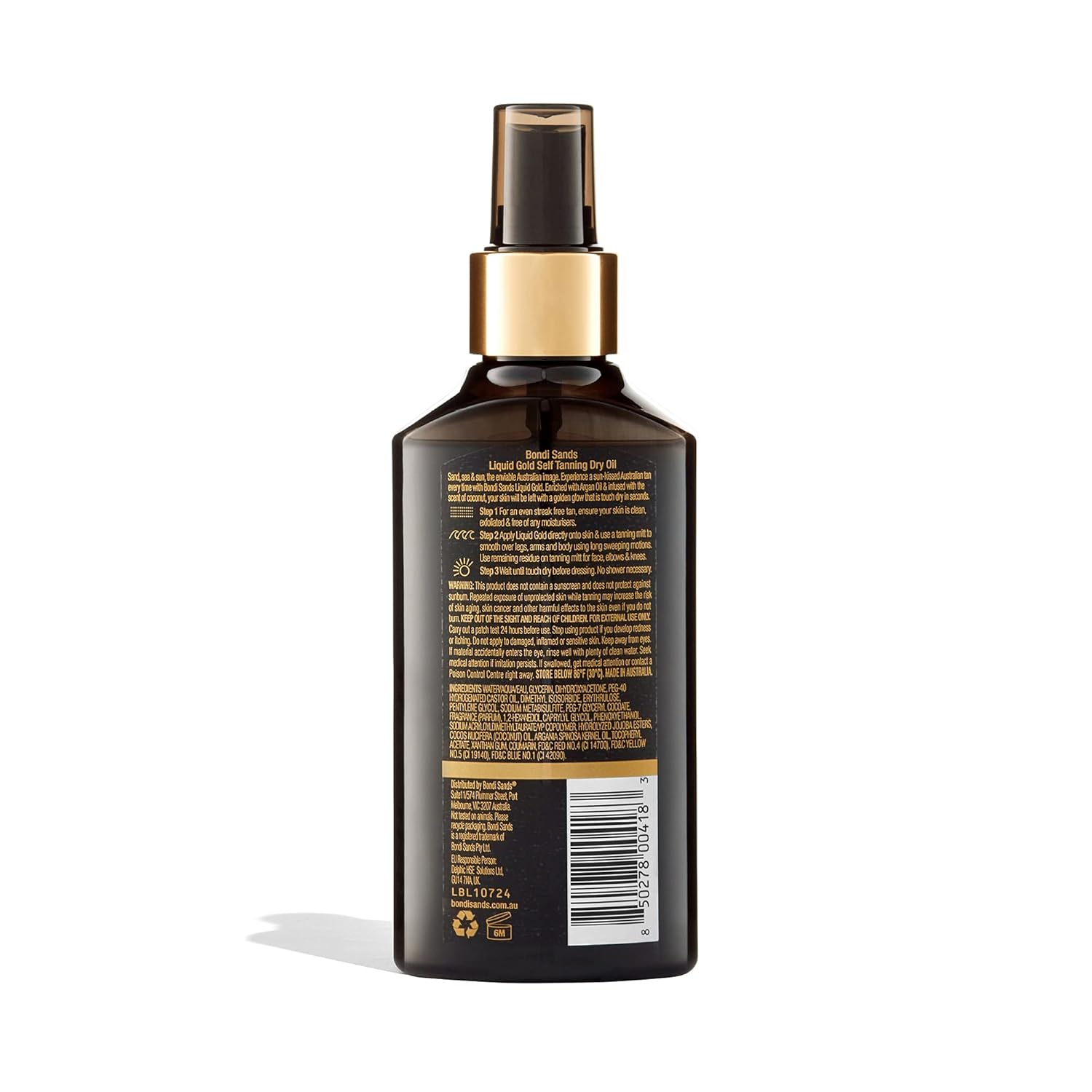
If you’ve ever picked up a bottle of self-tanning oil and wondered what exactly makes it different from a regular body oil — or from a mousse or lotion tanner — you’re in the right place. Self-tanning oils combine two things at once: a color-developing ingredient (most commonly DHA, short for dihydroxyacetone, a sugar-derived compound that reacts with the outermost layer of your skin to create a brown tone over several hours) and a skin-nourishing base, usually a blend of plant oils that hydrate and add luminosity as they absorb. The promise is that you get your tan and your skincare treatment in the same step. Whether that promise holds up depends almost entirely on formula quality — specifically, which oils are in the base, how much DHA they’re pairing with those oils, and whether the result actually looks like skin or looks like a slip-n-slide.
This article compares three formulas that come up repeatedly in the intermediate-to-enthusiast conversation: Bondi Sands Liquid Gold Self Tanning Dry Oil, Josie Maran Argan Illuminizer Self-Tanning Body Oil, and TanOrganic The Original Self-Tanning Oil. We’ll break down what’s in each, what reviewers consistently report about finish and longevity, where the tradeoffs live, and which one deserves your shelf space depending on what you’re optimizing for.
| EDITOR'S PICKTanOrganic Self Tanning Oil 100… | Mid-tierAustralian Gold Bronzing Intens… | Budget pickAustralian Gold Rapid Tanning I… | |
|---|---|---|---|
| Tan type | Self tanner | Bronzing intensifier | Tanning intensifier |
| Volume | 100 ml (3.4 Fl Oz) | 8 Fl Oz | 8.5 Fl Oz |
| Organic | ✓ | — | — |
| Price | $39.99 | $9.99 | $7.37 |
| See on Amazon → | See on Amazon → | See on Amazon → |
What “Dry Oil” Actually Means — and Why It Matters for Tanning
Before comparing products, it’s worth understanding the format. A dry oil is an oil that absorbs quickly and leaves little to no greasy residue — think rosehip, argan, marula, or squalane, as opposed to heavier carriers like mineral oil or coconut oil. In a self-tanning context, a true dry-oil base does a few meaningful things:
- It lets DHA contact the skin evenly rather than sliding around on top of a thick, occlusive layer
- It reduces the risk of streaking because you’re not fighting the formula’s drag on the skin
- It leaves a luminous rather than shiny finish — the difference between “glowing” and “greasy”
Paula’s Choice Skincare Education, in their guide “How Self-Tanners Work,” explains that DHA effectiveness is partly dependent on how uniformly the product contacts the stratum corneum — the outermost skin layer. Heavy, slow-absorbing bases can interfere with that contact, which is one reason lighter oil formats can produce cleaner color results on smooth, prepped skin.
The flip side: dry oils can feel too fast-moving if you’re not confident with your application technique. They don’t have the built-in resistance of a mousse, so there’s less time to blend before the formula starts to set. For intermediate users who’ve moved past the learning curve with mousses, this is usually manageable — but it’s worth naming upfront.
The Three Formulas: What’s Actually in the Bottle
Bondi Sands Liquid Gold Self Tanning Dry Oil (~$22–$28)
Bondi Sands positions Liquid Gold as the accessible entry point into oil-format tanning, and based on price and availability it delivers on that positioning. The formula lists argan oil prominently — a lightweight, fast-absorbing oil high in oleic and linoleic acids. Byrdie, in their roundup “The Best Self-Tanning Oils for a Natural-Looking Glow,” flags argan-based formulas as a standout category for finish quality in this price range. The color result is described across aggregated reviews as medium-depth with a warm, golden undertone, which skews flattering on olive and medium Fitzpatrick types (roughly Fitzpatrick III–IV) but can edge toward orange on very fair skin if over-applied.
DHA concentration is not disclosed on-pack, which is common in mass-market formulas. Based on the develop-time guidance — 6–8 hours for full color, with a lighter result if rinsed at 2–3 hours — the DHA load is likely in the moderate range typical of drugstore and mid-tier products. Healthline, in their article “DHA in Self-Tanner: What You Need to Know,” describes how develop-time guidance can serve as a rough proxy for concentration when manufacturers don’t disclose specific percentages.
Where it wins: Price-to-finish ratio. For under $28, this is one of the cleanest oil-format results in accessible retail. The dry-down is genuinely fast — most reviewers note no transfer to clothing after 10–15 minutes.
Where it doesn’t: The biscuit smell — that signature DHA-reaction odor, often described as biscuity or bread-like — is reported as present and notable, especially during the develop window. Not worse than category average, but not solved. Longevity reports cluster at 4–5 days before noticeable fading, which is shorter than the premium tier.
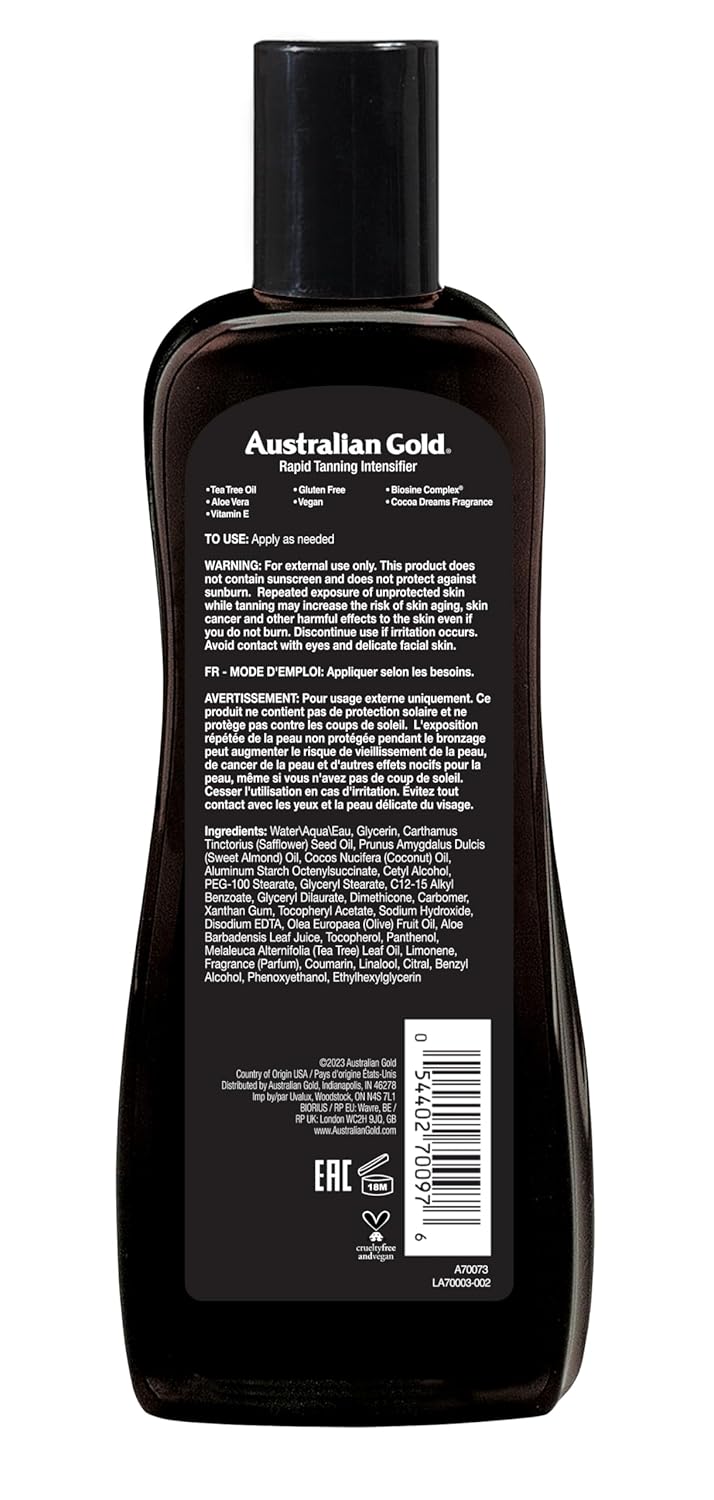
Australian
$7.37
In stock on Amazon
Check price on AmazonJosie Maran Argan Illuminizer Self-Tanning Body Oil (~$50–$58)
Josie Maran’s tanning oil sits in the mid-premium tier and leans hard into the brand’s argan-oil heritage. The formula is built on 100% pure argan oil as its carrier, with added marula and vitamin E — a combination that Byrdie’s self-tanning oil roundup describes as delivering “noticeably softer skin” in the days following use, which separates it from formulas where the skincare claims are largely marketing copy.
The color story is where this formula gets interesting. Allure, in their coverage “The Best Self-Tanners of 2025,” describes the finish of luminous oil-format tanners in this class as reading “natural-bronze rather than deep tan.” This is a formula optimized for a subtle, skin-like glow — not for building the darkest possible result. That’s the right call for the brand’s positioning (clean, natural-beauty-adjacent) but it’s a meaningful tradeoff if you’re looking for depth.
The EWG Skin Deep Database rates the ingredient profile of formulas with this component profile favorably, with most components scoring in the low-concern range — relevant for the skincare-first audience who reads INCI lists the way they read serums.
Where it wins: Genuine skincare performance in the base. Reviewers consistently report softer, more hydrated skin in the days post-application — not just the day of. The luminous finish photographs well and layers cleanly over body moisturizers without pilling. For the beauty-editor or skincare-first reader, this is the formula that feels most like a complexion product for the body.
Where it doesn’t: Color payoff is modest — this is a one-shade-deeper-than-your-natural-skin result, not a deep tan. If you’re a Fitzpatrick I–II skin looking to go notably darker, you’ll either need multiple applications or a different formula. Develop time is 4–6 hours for full effect, which is on the shorter end, but the result is subtle enough that some reviewers layer it over a mousse base for depth before applying the Josie Maran as a finishing oil.
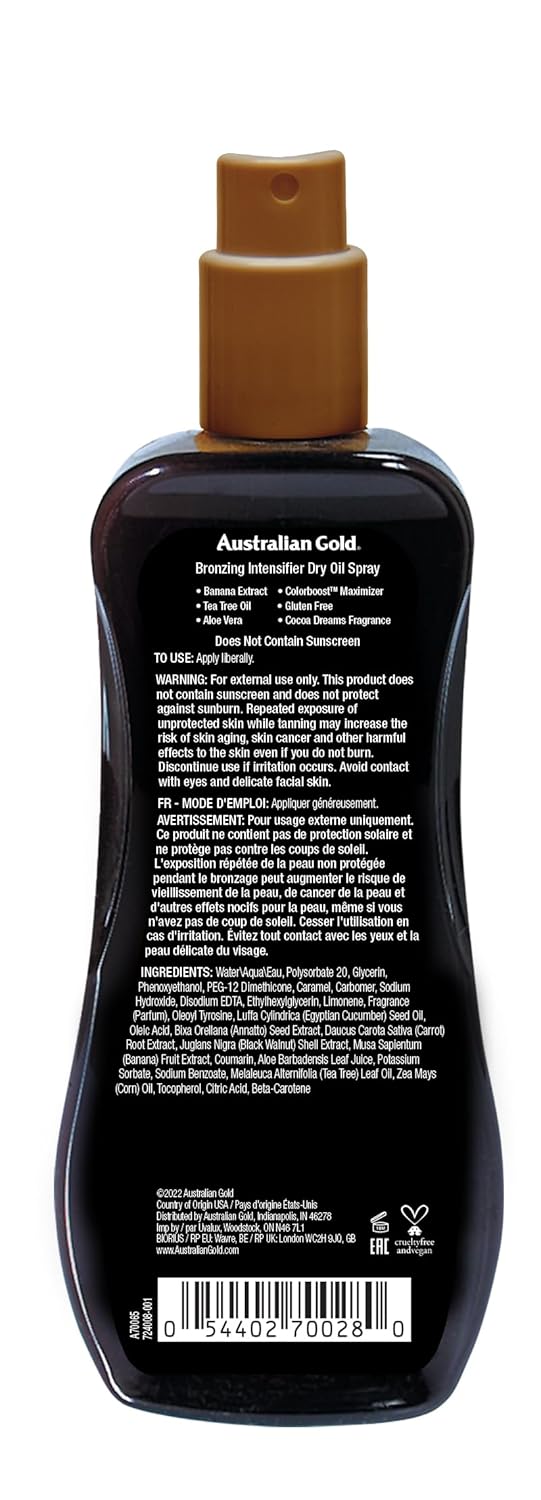
Australian AGDOBS
$9.99
In stock on Amazon
Check price on AmazonTanOrganic The Original Self-Tanning Oil (~$45–$55)
TanOrganic is the outlier in this comparison — it’s a certified organic formula (COSMOS Organic certified) and one of the only self-tanners at any price point to disclose its DHA source as plant-derived, from sugar beet. The base is a blend of argan, sunflower, and rosehip oils, all dry-finish, with no synthetic fragrance added.
The clean-ingredient story is genuine. The EWG Skin Deep Database rates TanOrganic’s formula in the low-concern tier across the board. Paula’s Choice Skincare Education, in their ingredient-level guidance on self-tanner formulation, confirms that argan, sunflower, and rosehip are among the non-comedogenic oil choices most appropriate for sensitive and acne-prone skin — which matters because oil-format tanners applied to the body can occasionally trigger breakouts on the chest, shoulders, or back in breakout-prone individuals.
Color-wise, reviewers across aggregated sources describe the result as warm and natural rather than deep, with an undertone that reads olive-neutral rather than the warm-orange of many DHA formulas. Healthline’s “DHA in Self-Tanner: What You Need to Know” notes that plant-derived DHA behaves similarly in the reaction with skin amino acids to its synthetic counterpart, so the cleaner sourcing doesn’t compromise the underlying chemistry.
Where it wins: Ingredient transparency is best-in-class in this format. The DHA sourcing disclosure alone sets it apart from every competitor at this price tier. Reviewers with sensitive skin and a history of self-tanner-induced irritation report notably fewer issues. The absence of synthetic fragrance also means no DHA-masking perfume — some users find this more clinical-smelling, but it’s honest.
Where it doesn’t: The formula is thinner and faster-moving than the Josie Maran, which can make application on large surface areas (full legs, back) feel rushed. Reviewers in longer-run write-ups note that develop time runs 4–8 hours with significant variability depending on skin prep — meaning if you skip exfoliation, your results will be noticeably uneven. It is less forgiving than the two competitors on imperfect prep.
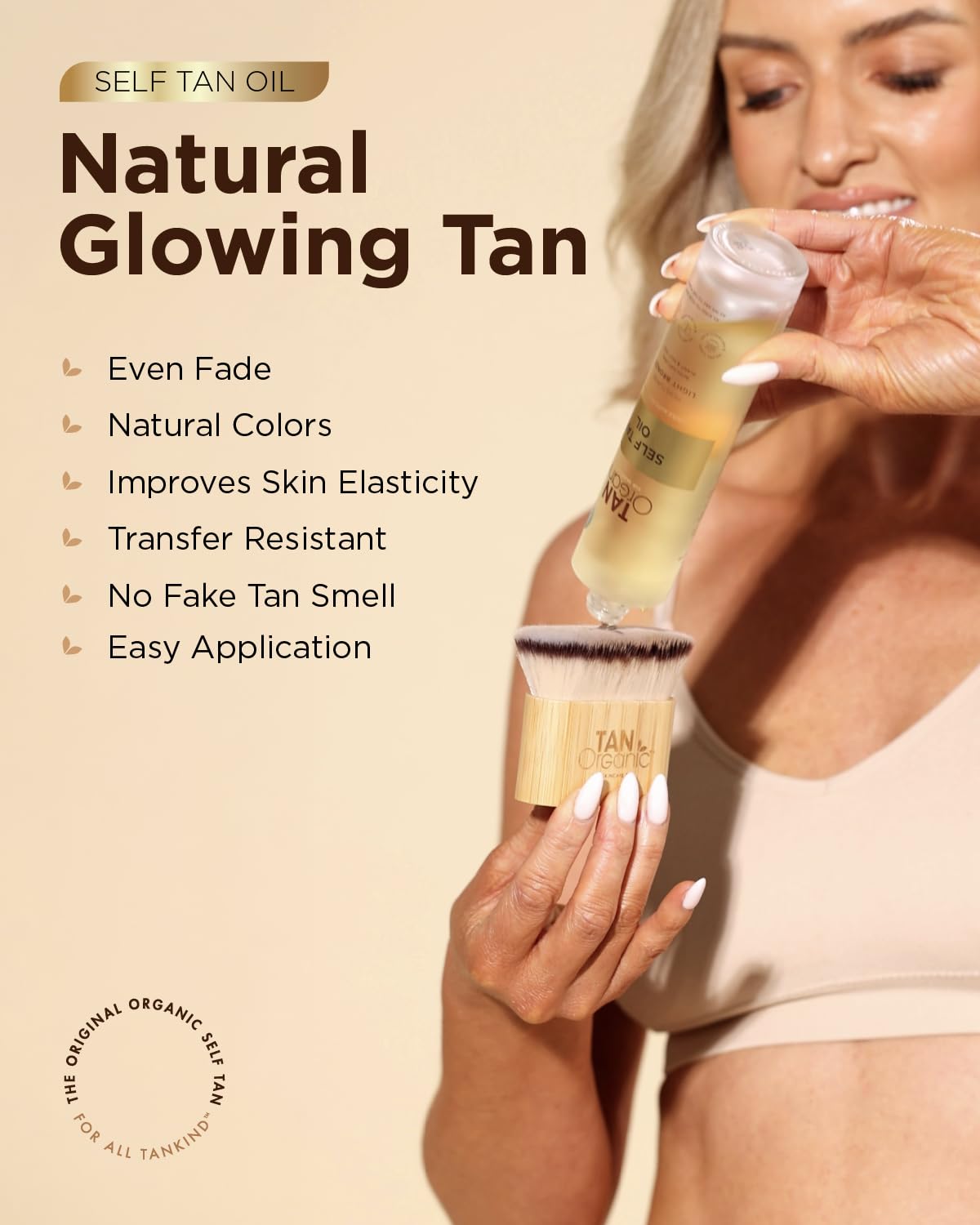
TanOrganic
$39.99
In stock on Amazon
Check price on AmazonSide-by-Side Snapshot
| Formula | Price (approx.) | Develop Time | Key Base Oils | DHA Source Disclosed? | Scent Level |
|---|---|---|---|---|---|
| Bondi Sands Liquid Gold | $22–$28 | 6–8 hrs (express 2–3 hrs) | Argan | No | Moderate |
| Josie Maran Argan Illuminizer | $50–$58 | 4–6 hrs | Argan, Marula, Vit E | No | Light / masked |
| TanOrganic Original | $45–$55 | 4–8 hrs | Argan, Sunflower, Rosehip | Yes (plant-derived) | Minimal / unmasked |
Which One Belongs in Your Routine?
Here’s the honest decision framework, built around what you’re actually optimizing for rather than which label looks best on a shelf.
If your primary goal is color depth and you’re budget-conscious, Bondi Sands Liquid Gold is the clear call. It’s the most pigmented of the three in terms of visible result, slightly easier to move across skin than the TanOrganic thanks to a marginally thicker texture, and a legitimate step up in finish quality from a gradual lotion. The DHA biscuit smell during develop is the tax you pay for that price point. Byrdie’s roundup “The Best Self-Tanning Oils for a Natural-Looking Glow” consistently places formulas in this profile at the top of the accessible tier for exactly this reason.
If your primary goal is skin quality and the tan is almost secondary, Josie Maran is the pick. The skincare performance in the base is real — reviewers consistently report softer skin days after application, not just the day of. The luminous finish is genuinely different from what a mousse or lotion delivers. This is the formula to reach for when you want to look like your skin is healthy rather than like you applied something to it. Expect a modest color result and plan to layer if you want more depth. Allure’s coverage in “The Best Self-Tanners of 2025” positions this class of luminous oil-format tanner as the choice for users who prioritize a natural finish over maximum color payoff.
If you have reactive skin or you read ingredient labels the way you read serums, TanOrganic is worth the extra scrutiny. The COSMOS Organic certification and the DHA sourcing disclosure are not marketing noise — they reflect real formulation choices that are verifiable in the INCI list. For the skincare-first reader who has experienced breakouts or irritation from other self-tanners, this is the formula most likely to perform without incident. Come in with thorough exfoliation or the variability in develop time will cost you clean results.
One note for anyone making the jump from a gradual lotion or drugstore foam to any of these oil formats: all three formulas will reward you for investing five minutes in dry exfoliation 24 hours before application. Paula’s Choice Skincare Education’s guidance on self-tanner prep consistently emphasizes that the outermost cell layer of skin must be smooth and uniform for DHA to develop evenly — and that prep step is even more consequential with a fast-absorbing oil format than with a slower-moving mousse. That single habit is the difference between “this is okay” and “this is the formula I tell people about.”
Pricing reflects typical retail availability as of May 2026. Individual results vary by Fitzpatrick type, skin prep, and application technique. Product formulations are subject to change; always review current INCI lists at time of purchase.