May 3, 2026 • Celeste Morrow • 9 min reading time • Prices verified June 4, 2026
Golden, Bronze, or Orange? Matching Self-Tanner Undertones Across All Six Fitzpatrick Types
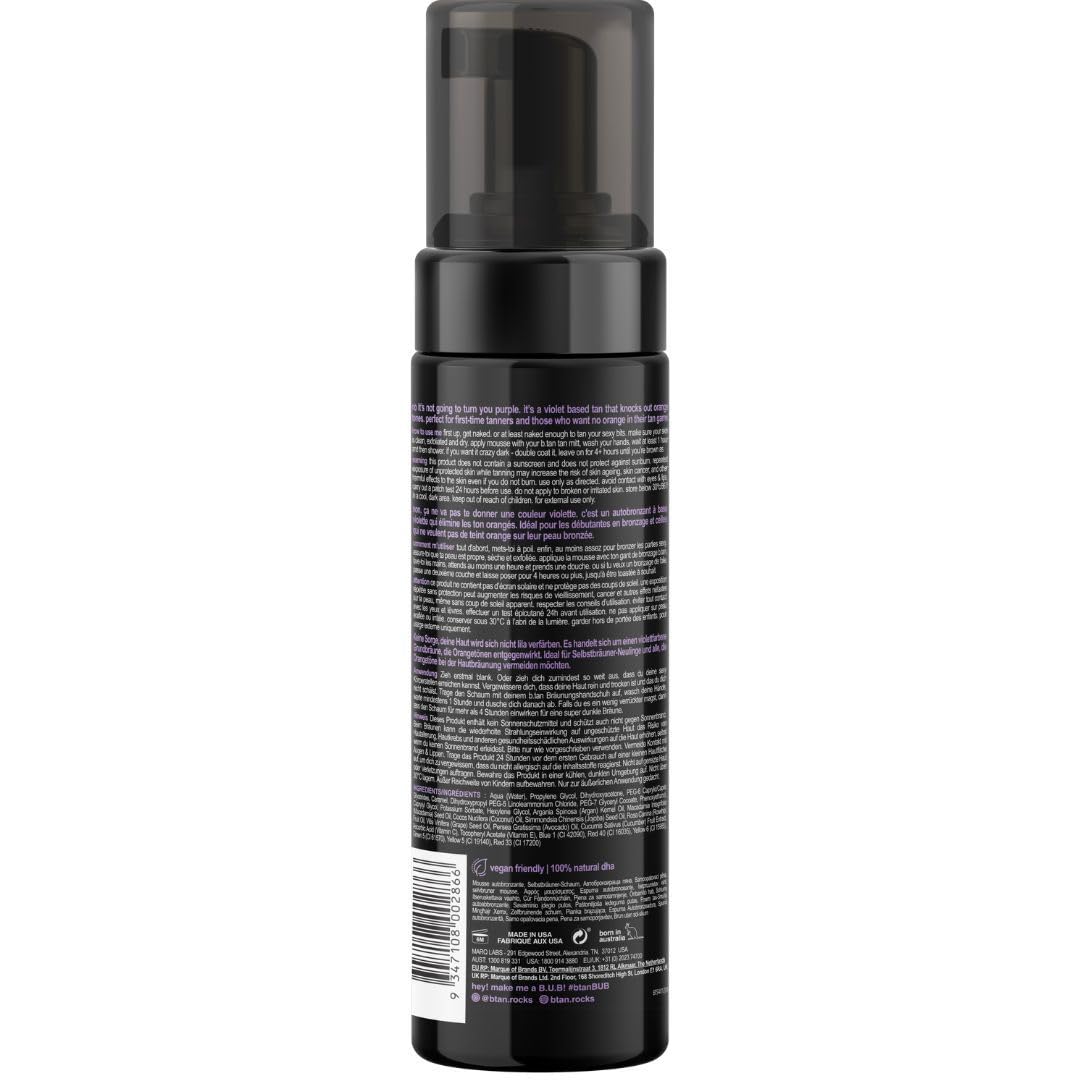
If you’ve ever applied a self-tanner that promised a “natural sun-kissed glow” and woke up looking like you’d been lightly stained with orange marker, the problem probably wasn’t your technique — it was an undertone mismatch. Self-tanners work through a chemical reaction between DHA (dihydroxyacetone, the active ingredient that darkens the outermost layer of skin) and your skin’s amino acids. That reaction is predictable in one way — it will darken you — but the color it produces varies based on your skin’s natural undertone, the DHA concentration in the formula, and whether the brand blended in additional tone-correcting pigments. Understanding that interaction is the single highest-leverage skill you can develop as a self-tanner, and it’s exactly what this guide is built to deliver.
We’ll map undertone behavior across all six Fitzpatrick skin types (a medical scale, explained below, that classifies skin from very fair to very deep), name the formulas that reviewers and brand specs consistently recommend for each tier, and end with explicit decision rules so you can stop guessing at the shelf.
| EDITOR'S PICK[St.Tropez Classic Bronzing Self](https://www.amazon.com/dp/B081KHWCNK?tag=greenflower20-20)… | Mid-tier[Norvell Venetian Sunless Self T](https://www.amazon.com/dp/B00ITYDZ2Y?tag=greenflower20-20)… | Budget pick[Bondi Sands Liquid Gold Self Ta](https://www.amazon.com/dp/B01GQQU1AU?tag=greenflower20-20)… | |
|---|---|---|---|
| Type | Mousse | Mousse | Dry Oil |
| Size | 8 Fl Oz | 8 Fl Oz | 5.07 oz |
| Streak-Free | ✓ | — | — |
| Anti-Orange | — | ✓ | — |
| Price | $44.00 | $37.50 | $12.00 |
| See on Amazon → | See on Amazon → | See on Amazon → |
What the Fitzpatrick Scale Actually Tells You (and What It Doesn’t)
The Fitzpatrick scale was originally developed as a dermatological tool — a six-point classification of how skin responds to UV exposure, running from Type I (burns immediately, never tans, typically very fair with cool or neutral undertones) through Type VI (never burns, deeply pigmented, typically with warm or neutral-deep undertones). Allure’s self-tanner guide notes that the scale has become the beauty industry’s shorthand for product formulation guidance, even though it was never designed for that purpose.
Here’s the important caveat: Fitzpatrick type describes burning and tanning response, not undertone. Two people can both be Fitzpatrick III (medium, beige skin that tans gradually) while one has a cool pink undertone and the other reads olive or warm yellow. That distinction matters enormously for self-tanner selection because DHA’s oxidation reaction produces a color on a warm-to-cool spectrum — and that output color is going to interact with your undertone, not your Fitzpatrick number alone.
Think of Fitzpatrick type as a proxy for baseline depth: it tells you roughly how much DHA you need to see a visible result. Undertone tells you which formulas will enhance versus fight your natural complexion.
Quick Fitzpatrick reference:
| Type | Typical Description | Burns/Tans Pattern |
|---|---|---|
| I | Very fair, often freckled | Always burns, never tans |
| II | Fair, light eyes common | Burns easily, tans minimally |
| III | Medium beige/light olive | Burns moderately, tans gradually |
| IV | Olive to light brown | Burns minimally, tans well |
| V | Brown to deep brown | Rarely burns, tans deeply |
| VI | Very deep brown to ebony | Never burns |
How DHA Concentration Shapes the Color You Actually Get
Paula’s Choice’s overview of self-tanning ingredients explains that most over-the-counter self-tanners contain between 2.5% and 10% DHA, with gradual formulas sitting at the lower end and one-night-develop mousses toward the higher end. That percentage is the most important number on a spec sheet — and most brands don’t print it.
Here’s the practical behavior across that range:
- Low DHA (2.5–4%): Produces lighter, more golden results. Less oxidation means less of the warm-amber-to-orange color shift. Better suited for Fitzpatrick I–II, where even a light reaction shows visibly, and for cool undertones that could read orange under higher concentrations.
- Mid DHA (5–7%): The workhorse range for most formulas — Fitzpatrick II–IV territory. Byrdie’s self-tanner guide consistently rates this tier as the sweet spot for a believable bronze without the orange risk, assuming erythrulose is present to soften the result (more on that below).
- High DHA (8–10%+): Delivers deeper, richer color. Fitzpatrick IV–VI users typically need this tier to see meaningful depth. The tradeoff: orange risk is highest here if the formula lacks corrective pigments or erythrulose blending.
Erythrulose is the secondary active worth knowing. It develops more slowly than DHA (48–72 hours versus 4–8 hours), produces a redder-toned result independently, but crucially blends with DHA’s more orange oxidation to produce a balanced, brown result. Healthline’s overview of DHA notes that formulas combining both actives tend to earn the highest “natural-looking” scores in aggregated reviews precisely because the erythrulose smooths the color over time.
Undertone Matching by Fitzpatrick Type: The Decision Framework
Fitzpatrick I–II: Fair to Light (Cool, Neutral, or Pink Undertones)
This is the highest-risk zone for orange outcomes. Fair skin has less melanin buffering the DHA reaction, which means the amber oxidation reads more vividly — and if your undertone is cool or pink to begin with, that warmth clashes rather than complements.
What to look for: Low-to-mid DHA formulas, ideally with erythrulose blending. Reviewers at Byrdie and Allure consistently point to Isle of Paradise Self-Tanning Drops in Light (color-correcting green pigment, low DHA) as a reliable golden-not-orange result for this type. St. Tropez Self Tan Purity Bronzing Water Mousse also earns consistent praise from reviewers in this range for a sheer, cool-bronze finish rather than the warm-orange outcome many fair tanners dread.
What to avoid: High-DHA overnight mousses marketed for “deep bronze” — these are formulated assuming melanin depth that Fitzpatrick I–II skin doesn’t have. The result is typically orange at the surface rather than a layered bronze. Harper’s Bazaar’s luxury self-tanner coverage notes this as the most common category mistake among first-time premium buyers at the fair end of the scale.
Undertone decision rule: Cool or neutral-cool undertone + Fitzpatrick I–II → prioritize formulas with green or violet color-correcting pigments and DHA in the 3–5% range. Warm-neutral undertone in this range → you have more latitude; a mid-DHA golden formula with erythrulose will typically read beautifully.
Fitzpatrick III–IV: Medium to Olive (Neutral, Warm, or Yellow-Green Undertones)
This is the range where self-tanning gets genuinely enjoyable — there’s enough melanin depth to buffer the reaction and enough natural warmth in most undertones to complement DHA’s oxidation. The orange problem is real but manageable with formula selection.
The key variable here is whether your undertone reads warm-yellow (most olive and Mediterranean complexions) or cool-neutral (some medium complexions, particularly East Asian and lighter mixed-heritage skin). Warm-yellow undertones in this range will absorb DHA’s amber result and read as deep golden to bronze — exactly what the label promises. Cool-neutral undertones in Fitzpatrick III–IV can still pull orange if the DHA concentration is high and there’s no erythrulose or corrective pigment.
What to look for: Reviewers in this category consistently report the best results from Tan-Luxe The Body Illuminating Self-Tan Oil ($60), which layers a dry-oil texture with mid-range DHA and a luminous finish that flatters warm and olive undertones particularly well. Vita Liberata pHenomenal Mousse ($65) earns praise in aggregated reviews for its odor-controlled formula and brown-toned result that reads less warm-amber than standard mousse — relevant for cooler undertones in this range.
Undertone decision rule: Warm or olive undertone + Fitzpatrick III–IV → mid-to-high DHA, golden or bronze formulas, minimal color-correcting needed. Cool-neutral undertone in this range → treat yourself more like a Fitzpatrick II; choose erythrulose-blended formulas and avoid the darkest overnight concentrations.
Fitzpatrick V–VI: Deep Brown to Ebony (Warm, Neutral-Deep, or Red Undertones)
This is the range that most self-tanner marketing ignores — and where the formula mismatch problem is worst. Deep skin needs high DHA concentrations to produce visible results, but many formulas at that concentration lack the pigment correction to read as true bronze rather than ashy-gray or oddly warm at the surface.
The specific failure mode here is ashy oxidation: on deeply pigmented skin, DHA can produce a grayish or chalky cast rather than bronze, particularly on drier areas like knees, elbows, and ankles where the formula sits unevenly on skin texture. Paula’s Choice’s self-tanner explainer notes that thorough exfoliation and barrier preparation are non-negotiable for this skin type — not because the chemistry works differently, but because the visual contrast of ashy patches is more pronounced against deeper skin.
What to look for: High-DHA formulas with added bronzing pigments (not just DHA-reliant color), plus formulas explicitly marketed toward deeper complexions. Isle of Paradise drops in Dark, and Loving Tan Deluxe Bronzing Mousse in Ultra Dark, consistently appear in aggregated reviews as top performers for Fitzpatrick V–VI, with reviewers specifically noting that the color reads brown and dimensional rather than orange or gray.
Undertone decision rule: Deep warm or red undertone + Fitzpatrick V–VI → choose formulas with both high DHA and supplemental bronzing pigment; avoid products that achieve depth through DHA alone. Neutral-deep undertone → erythrulose-heavy formulas reduce the ashy risk while still delivering depth.
By the Numbers: Undertone Risk by Fitzpatrick Tier
| Fitzpatrick | Primary risk | DHA sweet spot | Erythrulose priority |
|---|---|---|---|
| I–II | Orange | 3–5% | High |
| III–IV | Orange (cool) / none (warm) | 5–7% | Medium |
| V–VI | Ashy or gray | 8–10%+ | High |
The Practical Checklist Before You Buy
The framework above is built on research synthesis — published brand specs, aggregated reviewer reports from Allure, Byrdie, and Harper’s Bazaar, and ingredient analysis from Paula’s Choice and Healthline. What no guide can promise is how a specific formula will interact with your exact skin chemistry, because DHA’s reaction is genuinely individual. Reviewers will report the same product reading “golden and natural” and “distinctly orange” on different users — both can be true, based on undertone and skin condition.
Use this as your pre-purchase filter:
- Identify your Fitzpatrick type — roughly, how does unprotected skin respond to sun in summer?
- Identify your undertone — cool (pink/blue veins, silver jewelry), warm (yellow/green veins, gold jewelry), or neutral.
- Cross-reference with the DHA tier above — do not buy a formula designed for depth you don’t need.
- Check for erythrulose on the ingredient list — if orange is your historic problem, this is your corrective mechanism.
- Start with one application and a 4-hour develop before committing to overnight — this is true even for experienced tanners switching to a new formula.
If X, then Y — the summary decision rule:
- Cool undertone, any Fitzpatrick → erythrulose blending + color-correcting pigment (green or violet); avoid DHA-only formulas above 5%.
- Warm undertone, Fitzpatrick III–IV → you have the widest formula latitude; golden and bronze both read well.
- Fitzpatrick V–VI, any undertone → high DHA + supplemental bronze pigment; exfoliation prep is non-negotiable.
- First-time buyer anywhere on the scale → start at a lower DHA tier (Jergens Natural Glow at ~$10 or Bondi Sands Everyday Gradual at ~$18) to map how your undertone reacts before investing in premium formulas.
The undertone question is the most consequential decision in self-tanning — more than technique, timing, or price point. Get that match right, and the rest of the routine is refinement.